
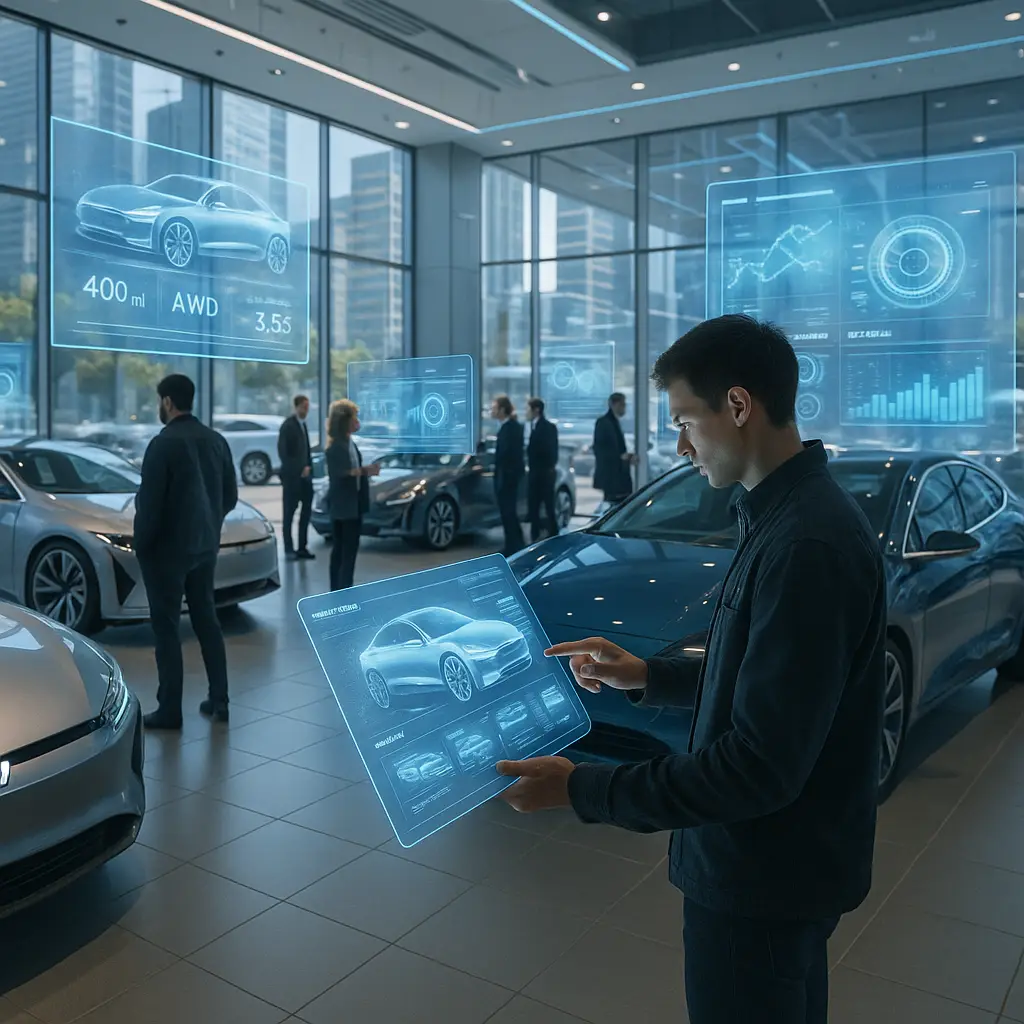
The Evolution of Automotive Discovery through AI
In an era where technology continuously reshapes industries, the automotive sector stands at the forefront of innovation. Artificial Intelligence (AI) has emerged as a pivotal force driving transformation within this field, influencing how consumers discover vehicles and how businesses grow. From enhancing customer experiences to optimizing operational efficiency, AI-powered solutions are revolutionizing automotive discovery.
AI-Driven Customer Experiences
AI technologies are significantly improving customer experiences by personalizing interactions and streamlining the car-buying process. Chatbots and virtual assistants are now commonplace, providing instant responses to consumer inquiries, scheduling test drives, and offering tailored vehicle recommendations. These AI tools help create a seamless journey, enhancing customer satisfaction and fostering brand loyalty.
Predictive Analytics for Business Growth
Beyond customer interaction, AI is instrumental in predictive analytics, offering insights into market trends and consumer behavior. Automotive businesses can harness these insights to make data-driven decisions, optimize inventory, and tailor marketing strategies. This proactive approach not only aids in meeting consumer demands but also positions businesses for sustainable growth.
Impact on Automotive Business Operations
The integration of AI in automotive operations extends beyond customer-facing applications. It also plays a critical role in streamlining supply chain management, improving manufacturing processes, and enhancing vehicle safety features.
Optimizing Supply Chain Management
AI solutions facilitate efficient supply chain management by predicting demand, optimizing logistics, and reducing costs. By analyzing vast datasets, AI can forecast fluctuations in supply and demand, enabling businesses to adjust accordingly and maintain operational efficiency.
Enhancing Safety and Innovation
AI technologies are pivotal in advancing vehicle safety and innovation. From autonomous driving capabilities to advanced driver-assistance systems (ADAS), AI helps in processing real-time data to enhance safety features. This innovation not only protects consumers but also positions companies as leaders in cutting-edge automotive technology.
The Road Ahead: AI and the Automotive Future
As AI continues to evolve, its impact on the automotive industry will only grow. The potential for AI to transform vehicle discovery and business operations is vast, offering unprecedented opportunities for growth and innovation. Companies that embrace AI solutions will likely lead the charge in shaping the future of automotive technology.
Conclusion and Call to Action
The integration of AI into the automotive industry is not just a trend but a fundamental shift poised to redefine the landscape. For businesses eager to harness the power of AI, strategic implementation is crucial. At Apeiros Marketing, our expertise in digital transformation and AI solutions can help businesses navigate this new terrain. Contact us today for a consultation or to learn more about our SEO services that can enhance your online presence and drive business growth.
FAQs
- How does AI improve automotive business growth? AI improves growth by enhancing customer experiences, optimizing supply chain management, and providing predictive analytics for data-driven decision-making.
- What role does AI play in customer interactions? AI enhances customer interactions through chatbots and virtual assistants, offering personalized and efficient responses.
- Can AI solutions enhance vehicle safety? Yes, AI solutions contribute to vehicle safety through advanced driver-assistance systems and autonomous driving technologies.
- How can businesses implement AI solutions? Businesses can implement AI solutions by partnering with experts like Apeiros Marketing to develop tailored strategies aligned with their goals.
- What are the benefits of AI in supply chain management? AI offers benefits such as demand forecasting, logistics optimization, and cost reduction, leading to increased efficiency.